What Is Sterile Compounding?
Sterile compounding is the preparation of medications that must be free from microorganisms, such as injectable drugs, IV solutions, and ophthalmic preparations. Because these medications bypass the body's natural defenses — entering directly into the bloodstream, tissues, or eyes — any contamination can cause severe infection, sepsis, or death.
This makes sterile compounding fundamentally different from non-sterile compounding (like mixing a topical cream or preparing an oral suspension). The stakes are higher, the environment must be more controlled, and the process requires specialized training, equipment, and facilities.
Every GLP-1 injectable — whether branded Ozempic or compounded semaglutide — is a sterile preparation. Understanding how sterile compounding works helps prescribers evaluate their compounding partners and helps patients understand the quality systems behind their medications.
Why Sterile Compounding Requires a Cleanroom
Ordinary air contains millions of particles per cubic meter — dust, skin cells, fibers, and microorganisms. When preparing a medication that will be injected into a patient, even microscopic contamination is unacceptable.
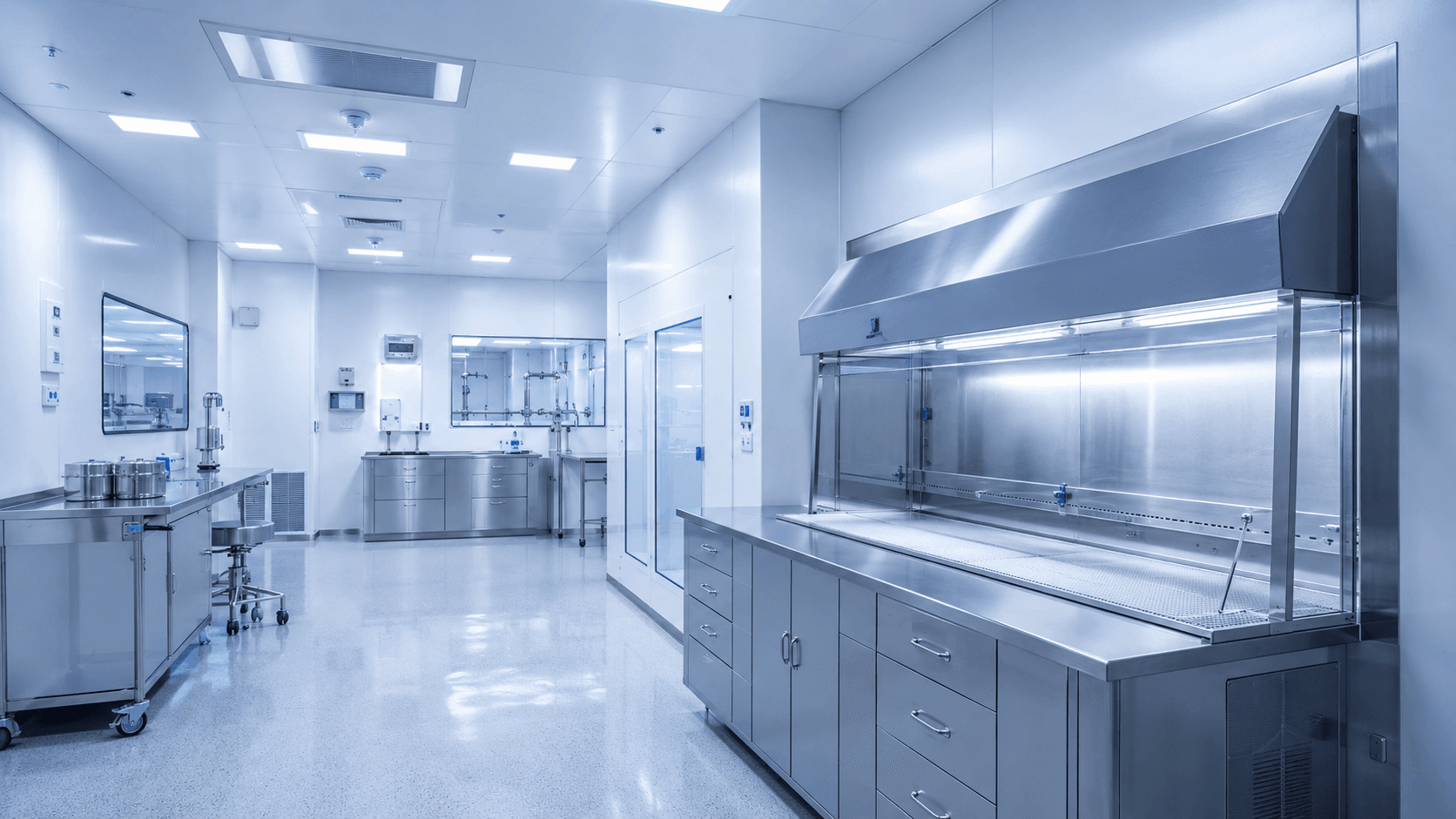
A cleanroom is a specially designed environment where air is continuously filtered through High Efficiency Particulate Air (HEPA) filters, removing 99.97% of particles 0.3 microns or larger. The room is pressurized to prevent unfiltered air from entering, and all surfaces are designed to minimize particle generation and facilitate thorough cleaning.
Cleanrooms are classified by ISO standards based on the maximum number of particles permitted per cubic meter of air. The three classifications relevant to sterile compounding are:
ISO Class 5 — the direct compounding area inside a laminar flow hood or barrier isolator. Maximum 3,520 particles of 0.5 microns or larger per cubic meter. This is where the pharmacist directly handles sterile ingredients and prepares the final product.
ISO Class 7 — the buffer room that houses the laminar flow hood. Maximum 352,000 particles per cubic meter. This room must maintain positive pressure relative to surrounding areas to prevent contamination from entering.
ISO Class 8 — the anteroom where personnel gown up and materials are staged before entering the buffer room. Maximum 3,520,000 particles per cubic meter. Still significantly cleaner than ambient air.
The pressure cascade is critical: ISO Class 5 is at the highest pressure, ISO Class 7 slightly lower, and ISO Class 8 lower still. This means air flows from the cleanest area outward, never the reverse.
USP 797: The Standard for Sterile Preparations
USP Chapter 797 is the standard published by the United States Pharmacopeia that governs the preparation of compounded sterile preparations (CSPs). While it originates in the United States, it is the most widely recognized international standard for sterile compounding and is referenced by compounding pharmacies globally, including in the Philippines.
USP 797 covers every aspect of sterile compounding including facility design and environmental controls (cleanroom classification, pressure differentials, air changes per hour), personnel training and competency assessment (aseptic technique validation, media fill testing, gloved fingertip sampling), cleaning and disinfection protocols for all cleanroom surfaces and equipment, environmental monitoring (viable and non-viable air sampling, surface sampling), standard operating procedures for each compounding activity, documentation and record-keeping, beyond-use dating based on the risk level of the preparation, and quality assurance programs.
The standard is comprehensive because the consequences of failure are severe. Historical incidents of contamination in compounding pharmacies — most notably the 2012 New England Compounding Center meningitis outbreak that killed 76 people — demonstrate what happens when sterile compounding standards are not followed.
A pharmacy that follows USP 797 has systems in place to prevent contamination at every stage of the compounding process.
The Sterile Compounding Process, Step by Step
While specific procedures vary by preparation, the general sterile compounding process follows a consistent sequence.
Master formulation record. The pharmacist references or creates a documented formula for the preparation, specifying ingredients, concentrations, equipment, procedure, and quality checks.
Ingredient verification. Each ingredient is verified against the formulation record. Certificates of Analysis are reviewed to confirm identity, purity, and potency. Lot numbers and expiration dates are documented.
Garbing. The pharmacist changes into sterile cleanroom garments in the anteroom. This typically includes shoe covers, hair cover, face mask, sterile gown, and sterile gloves. The garbing process follows a specific sequence designed to minimize the transfer of particles from the person into the cleanroom.
Cleaning and preparation. The laminar flow hood and work surfaces are cleaned and disinfected following documented protocols. Sterile supplies (syringes, needles, vials, filters) are staged in the hood.
Aseptic compounding. The pharmacist performs the actual preparation inside the ISO Class 5 environment, using aseptic technique — meaning every action is designed to prevent microbial contamination. Vial septa are disinfected before puncture, syringe tips are never touched, and airflow patterns within the hood are maintained.
Quality checks. The finished preparation is visually inspected for particulate matter, clarity, color, and volume accuracy. Depending on the preparation, additional testing may include pH measurement, potency verification, and sterility testing.
Labeling and documentation. The preparation is labeled with all required information and the batch record is completed with full traceability.
Quality Controls and Testing
Beyond the compounding process itself, a sterile compounding pharmacy maintains ongoing quality controls.
Environmental monitoring. Regular air sampling and surface sampling inside the cleanroom to detect any microbial contamination. Results are trended over time to identify potential issues before they affect product quality.
Personnel competency. Pharmacists and technicians undergo regular aseptic technique assessment, including media fill testing (simulating the compounding process using growth media to verify that the operator's technique doesn't introduce contamination) and gloved fingertip sampling.
Equipment certification. Laminar flow hoods, HEPA filters, and cleanroom environments are certified at regular intervals (typically every six months) to verify they still meet ISO classification standards.
Ingredient testing. Incoming raw materials are verified with supplier COAs and may undergo independent identity testing at the pharmacy.
Beyond-use dating. Each preparation is assigned a beyond-use date based on its risk category, ingredients, and storage conditions. This is the date after which the preparation should not be used, and it is determined by the stability characteristics of the formulation.
What Prescribers Should Ask Their Compounding Partner
If you're a physician evaluating a compounding pharmacy for sterile preparations, these are the questions that matter.
Does the pharmacy hold a valid FDA License to Operate? Is there a licensed Responsible Pharmacist supervising all sterile compounding? What cleanroom classification does the facility maintain, and how often is it certified? Does the pharmacy follow USP 797 standards? What environmental monitoring program is in place? Can the pharmacy provide batch records and COAs for each preparation? What beyond-use dating does the pharmacy assign, and on what basis? What training and competency assessment do compounding personnel undergo?
A pharmacy that can answer these questions clearly and provide documentation has the systems in place to produce safe, reliable sterile preparations.
ObraRx follows USP 797 standards for sterile compounding. If you're a prescribing physician looking for a compounding partner you can trust, contact us to learn more about our facility and processes.
FAQ
Q: What is sterile compounding?
A: Sterile compounding is the preparation of medications that must be free from microorganisms, such as injectable drugs and IV solutions. It requires a cleanroom environment, aseptic technique, and strict quality controls.
Q: What is USP 797?
A: USP 797 is the United States Pharmacopeia standard that governs the preparation of compounded sterile preparations. It covers facility design, personnel training, environmental monitoring, and quality assurance.
Q: What ISO classification is required for sterile compounding?
A: Sterile compounding requires an ISO Class 5 environment for direct compounding (inside a laminar flow hood), an ISO Class 7 buffer room, and an ISO Class 8 anteroom.